The Motion So ManyOverlooked
The most important motion on September 29, 2026, was not the motion for a required finding of not guilty that captured the attention of the country despite its expected denial by the court. The critical motion was a fight over a jury note and the sidebar questioning that preceded the mistrial.
It was the first step in a much larger dispute.
The Next Battle: The November 2 Motion Hearing
On November 2, the court is scheduled to consider the defense request for juror records and a limited inquiry concerning, among other things, the holdout juror’s questionnaire and voir dire responses and alleged cellphone use. The defense has requested the questionnaire and cellphone metadata.
If the judge does not decide the pending note and sidebar motion before November 2, the case could be continued again to give counsel time to review any newly released information. More importantly, the ruling on the note and sidebar could shape how the later hearing is argued.
The Commonwealth raised serious public policy concerns at the September 29 hearing. This case has received extraordinary publicity. Counsel for the holdout juror has described threats and a relocation, and other jurors have spoken publicly. The Commonwealth argued that disclosure could jeopardize juror safety, invade the confidentiality of deliberations, and discourage citizens from reporting problems or serving on juries at all. Those are legitimate concerns. Judge William Sullivan has already impounded the juror list based on a finding of risk of harm.
The defense presented the issue through a different lens: Lindsay Clancy’s constitutional rights. The question is not simply whether the public would like to know what happened. Clancy is asserting a right to a record of the inquiry that ended her trial because that inquiry is now central to her claim that she cannot constitutionally be tried again. She asserted that right through counsel, on the record, before the judge declared the mistrial.
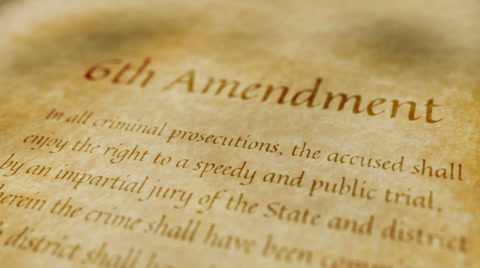
The Boston Globe and WBZ were heard on a separate First Amendment interest in access to judicial proceedings and records. The Sixth Amendment public trial right belongs to Clancy. She also has a Fifth Amendment double jeopardy interest in testing whether manifest necessity justified terminating her trial.
Four Cases Help Explain the Competing Arguments
The relevant cases do not establish that jury notes or sidebar discussions must be publicly released. Rather, they illuminate the constitutional principles implicated by closure, public access, juror privacy, and a defendant’s public trial right.
Waller: Closure Requires More Than a Generalized Concern
In Waller v. Georgia, 467 U.S. 39 (1984), the Supreme Court established the test for closing a criminal proceeding over a defendant’s objection. The party seeking closure must identify an overriding interest likely to be prejudiced; the closure must be narrowly tailored or broader than necessary; the court must consider reasonable alternatives; and it must make findings sufficient to support the closure.
Applied here, juror safety and deliberation secrecy could certainly qualify as significant interests. The more difficult issue is narrow tailoring.
The defense asked for the September 3 note and related sidebars with juror names redacted, arguing that redaction could protect jurors while preserving the record of what occurred before the mistrial was declared.
But Waller involved closure of a proceeding, not the later release of a jury note or sidebar transcript. Its principles inform the defense argument; they do not themselves establish a right to disclosure of these particular materials.
Presley: Courts Must Consider Alternatives
Presley v. Georgia, 558 U.S. 209 (2010), held that the public trial right extends to jury selection and that courts must consider reasonable alternatives before excluding the public. A broadly stated concern about jurors does not automatically justify closure.
Presley involved exclusion of a spectator from voir dire, not the later release of deliberative material. Its significance here is narrower: the defense has proposed an alternative to complete impoundment, specifically redaction.
Again, the analogy matters, but Presley does not establish that a sidebar transcript or jury communication must later be made public.
Cohen Brings the Issue Home to Massachusetts
In Commonwealth v. Cohen, 456 Mass. 94 (2010), the Supreme Judicial Court reversed convictions because the courtroom was closed during empanelment. At the same time, the court recognized that individual jurors may be questioned at sidebar, outside the hearing of spectators, when that questioning occurs in an otherwise open courtroom.
That distinction cuts partly against a broad public trial claim. The September sidebars were not inherently improper merely because spectators could not hear them.
The defense argument is narrower. Once that inquiry became part of the basis for ending the trial, its substance potentially became relevant to manifest necessity: What did the judge know? What did the jurors report? What questions were asked? And was removing a juror an available alternative to declaring a mistrial?
Globe Newspaper: The Commonwealth’s Strongest Massachusetts Authority
The Massachusetts case that most complicates the defense argument is Globe Newspaper Co. v. Commonwealth, 407 Mass. 879 (1990). The SJC recognized that the public ordinarily has no presumptive right of access to sidebar discussions or certain private judicial inquiries of jurors. The Commonwealth relied on that principle at the September 29 hearing.
That is significant. The issue cannot be framed as though the September 3 sidebar itself necessarily should have been public. Sidebars routinely and properly occur outside the hearing of spectators.
But that does not necessarily answer the question now before the court.
The defense is asking what happens when material properly received at sidebar later becomes part of the factual basis for terminating a trial and, consequently, part of a defendant’s challenge to whether that mistrial was constitutionally necessary.
The question, therefore, is not simply whether the September 3 inquiry could occur privately. Under Cohen, it generally could.
The harder question is whether the resulting note and transcript should remain impounded when the defense contends they are necessary to litigate double jeopardy and manifest necessity.
Juror Safety and Deliberation Secrecy vs Defendant’s Constitutional Rights
The Commonwealth’s concerns should not be minimized. Jurors should not be threatened or harassed for performing a civic duty, and Massachusetts law permits juror identifying information to be withheld for good cause, including risk of harm. A note identifying a juror and recounting events in the jury room implicates legitimate privacy and deliberative concerns. A rule under which every deadlock note automatically becomes public could also discourage future jurors from reporting problems.
But that does not end the inquiry.
The defense’s position is that when material becomes relevant to a constitutional challenge to a mistrial, safety and secrecy should be protected without unnecessarily preventing access to information needed to litigate that challenge.
Redaction is one possibility. Disclosure to counsel under an appropriate protective order could be another, even if broader public access is denied. Public curiosity is the weakest reason for disclosure. The legitimacy of the mistrial is not.
One possible middle ground would therefore be a partial grant: disclosure of appropriately redacted material necessary to litigate the constitutional issues while maintaining the impoundment of juror identities and unrelated deliberative material.
Whether Judge Sullivan concludes that such an accommodation is legally required remains to be decided.
November 2: Two Different Questions
This is where the procedural timeline becomes especially important.
The September 3 jury note and sidebar concern information available to the judge before the mistrial. The double jeopardy inquiry focuses on the circumstances confronting the trial judge at that time and whether manifest necessity justified ending the trial.
The note and sidebar are therefore potentially important parts of the record on which manifest necessity will ultimately be evaluated. They are not the entire record. The length and nature of deliberations, the judge’s inquiries, the arguments and objections of counsel, the instructions given to the jury, and the alternatives considered before declaring a mistrial are also relevant.
The motions involving the juror questionnaire and alleged cellphone use raise a different question because they concern information that largely surfaced after the mistrial.
Kevin Reddington has asked the court to examine Michael Desronvil’s confidential juror questionnaire and voir dire answers. I previously detailed the multistep process governing such an inquiry under Massachusetts case law beginning with Commonwealth v. Amirault.
Under Amirault and Commonwealth v. Mitchell, significant questions include whether a material answer was knowingly false and whether the nondisclosure demonstrates actual bias or prejudice warranting further judicial inquiry, potentially including a hearing involving the juror.
The defense also seeks cellphone information based on reports that Desronvil allegedly searched “psychosis” and “altruistic filicide.” If true, that would involve outside research, not merely possession of a cellphone. Whether it happened remains for the court to determine.
The Commonwealth can argue that the defense must first establish a sufficiently reliable factual basis for believing such research actually occurred before the court intrudes into jury deliberations or permits a forensic examination of a juror’s phone.
But if a juror actually researched the definition of “psychosis” or “altruistic filicide” during deliberations, the issue would go beyond possession of a prohibited cellphone. It would raise the separate question of whether extraneous information entered the jury process and whether the juror followed the court’s instruction to decide the case solely on the evidence presented at trial.
There Are Two Related But Distinct Inquiries
The first asks what Judge Sullivan knew, what occurred during the jury inquiry, what alternatives existed, and whether manifest necessity justified ending the trial.
The second asks whether evidence discovered afterward establishes juror misconduct, false voir dire responses, or exposure to extraneous information—and what bearing, if any, those findings may have on the defense motions now before the court.
Cases such as Commonwealth v. Nicoll, 452 Mass. 816 (2008), and Commonwealth v. Taylor, 486 Mass. 469 (2020), examine whether counsel had an opportunity to be heard and whether the trial judge carefully considered alternatives before terminating a trial. That makes what occurred during the September 3 inquiry potentially significant to the defense contention that further inquiry or removal of a juror was an available alternative to mistrial.
That is why the September 29 fight over a jury note and a sidebar should not be overlooked.
The constitutional issue is not whether every sidebar should become public. Nor is it whether juror safety and deliberative privacy matter. They plainly do. Still, the Sixth Amendment right to a public trial belongs to Lindsay Clancy.
The question is whether those interests can be protected through redaction, limited disclosure, a protective order, or another narrower measure when the information sought may bear directly on a defendant’s claim that her trial was terminated without manifest necessity.
All of the issues to be decided by the court bear on whether Lindsay Clancy can constitutionally be tried again.